Painting Against the Speed of the Present
Ross Easterby paints as if time were elastic.
His work looks back to the turn of the 20th century when artists, poets, and provocateurs crowded Parisian bars arguing about beauty and meaning while speaking directly to a restless present shaped by screens, speed, and distraction.
If one of your paintings could step back into art history, which century would it feel most at home in—and which one would it deliberately disrupt?
My work would feel most at home at the turn of the 20th century. I like the idea of hanging out with artists, poets, and rogues in the bars of Paris. That era’s fascination with beauty, craft, and nature really resonates with me. At the same time, my work is meant to disrupt the present — creating images that feel modern, but echo a slower, more intentional time, in contrast to a world dominated by screens, speed, and distraction.
You borrow from Mucha, Klimt, and Picasso, but your work never feels nostalgic. What do you take from the past, and what do you refuse to inherit?
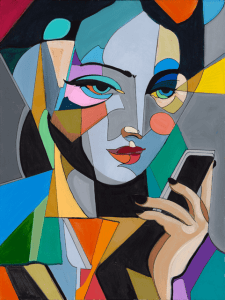
Mucha, Klimt, Picasso, and Matisse are huge inspirations for me. They all challenged the mainstream and helped redefine what art could be. I relate to that rebellious spirit. When I start a new piece, I often think about what they might be interested in if they were alive today, and try to translate that into my own work. What I refuse to inherit is the sense of competition. I’m at the beginning of my journey, and I want to learn, collaborate, and help encourage the art community in Leamington and beyond.
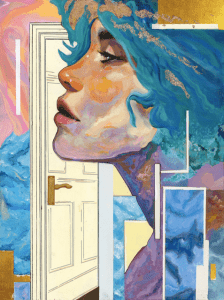
Your figures often look self-possessed, aware of being seen. Who do you imagine they’re looking at?
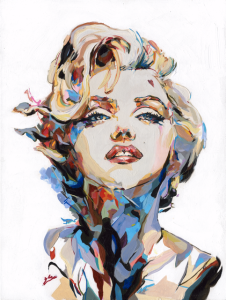
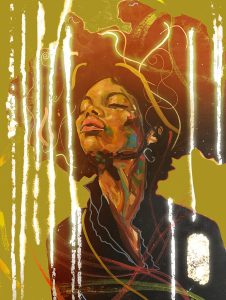
They’re aware of the viewer, but they’re not performing for them. My figures are grounded in who they are — proud, calm, and quietly confident. I like to think they have something to say, but they’re slightly out of time, unsure whether they’re being heard.
Classical beauty is often about harmony. Modern expression is often about fracture. Where do you enjoy letting things clash?
My background is in DJ-ing, and I’ve played in bars and clubs for most of my adult life. DJ-ing is about creating a journey — balancing coherence with surprise, educating while still giving people what they want, and making sure everyone is having fun. My art follows the same principles. I’m drawn to classical beauty, but I want my work to feel positive, energetic, and alive — something that reminds people that life is worth enjoying.
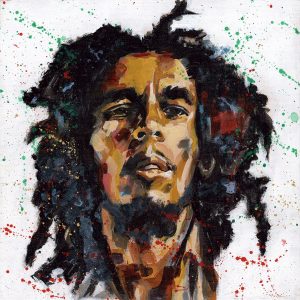
Many of your portraits feel iconic, almost poster-like, yet deeply intimate. How do you decide when a subject becomes a symbol?
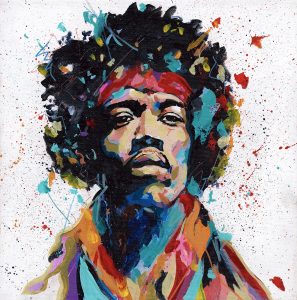
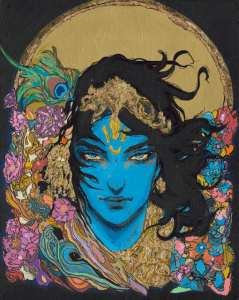
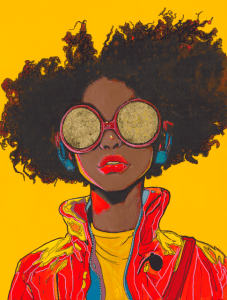
Growing up, I was obsessed with comics, sci-fi, and movie posters — and I still am. I used to stare at them for hours without realising how much they were shaping my visual language. Many of those stories were modern myths, with heroes that became cultural symbols. My art journey started with the desire to create my own characters — figures that feel iconic, but still human, and maybe inspire others in their own way.
Picasso once said it took him a lifetime to learn to paint like a child. What has painting taught you to unlearn?
The biggest thing I’ve unlearned is the need for perfection. I can’t paint like Picasso — not yet — but I’ve learned that progress comes from showing up, experimenting, and allowing myself to fail. More than anything, I’ve learned to quiet the inner voice that says, “Everyone is better than you, so why bother?” Painting has taught me to keep going anyway.
Your colour choices are confident, sometimes confrontational. How do you approach colour?
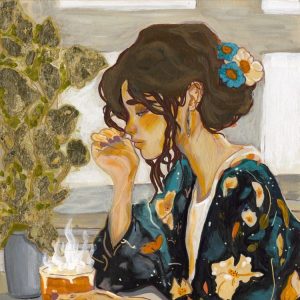
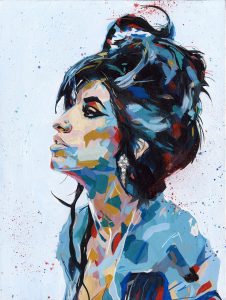
Colour has been one of my biggest growth areas over the last year. I’ve spent a lot of time studying colour theory and experimenting with complementary palettes. Many of my choices come from instinct and happy accidents. Acrylic paint is perfect for that — if something doesn’t work, I can paint over it and keep pushing until it does.
As lead artist for a sustainable fashion brand, how does responsibility shape your creativity without restraining it?
I believe creativity is something everyone has access to, but not everyone feels encouraged to use it. Through my sustainable fashion brand, I try to inspire people not only to care for the planet, but to value creativity itself. If my work encourages someone to express themselves — through art, music, or any creative outlet — then I feel I’ve done something meaningful.
When your paintings are worn instead of hung, what do you hope the wearer feels?
I want people to feel special and included. Not everyone can afford original artwork, but they can own and wear something made with care and intention. Knowing the piece was created by a human, produced ethically, and designed to last adds meaning. I want people to wear the work with pride — because it looks good and because it reflects values they care about.
What are contemporary audiences hungry for that traditional fine art sometimes forgets?
Everything feels increasingly disposable. We’re surrounded by instant images, instant content, and now instant art that delivers a quick dopamine hit and disappears. People are hungry for work that carries a human presence — something made slowly, intentionally, and imperfectly. As the world becomes more digital, connected and tactile experiences matter more than ever. But it needs to be accessible, sometime art can feel a bit of exclusive club, I think fine art forgets that most artists just want to be seen.
Do you believe beauty today needs permission to be political—or can it exist purely as pleasure?
When everything feels political, beauty can be a relief. I don’t think it needs permission or a manifesto. Sometimes pleasure, honesty, and authenticity are the most meaningful responses to a noisy world.
When does a painting tell you it’s finished?
Once I think a piece is finished, I put it in my living room and live with it. I write down what doesn’t sit right, return to it, and make changes. I repeat that process until the work feels whole. It doesn’t have to be perfect — I just have to believe in it.
If one of your muses could speak back to you, what would they ask?
They’d probably ask, “Did you paint me for yourself, or for what you thought other people would like?” That tension never fully disappears, but learning to trust my own instincts is part of the work